
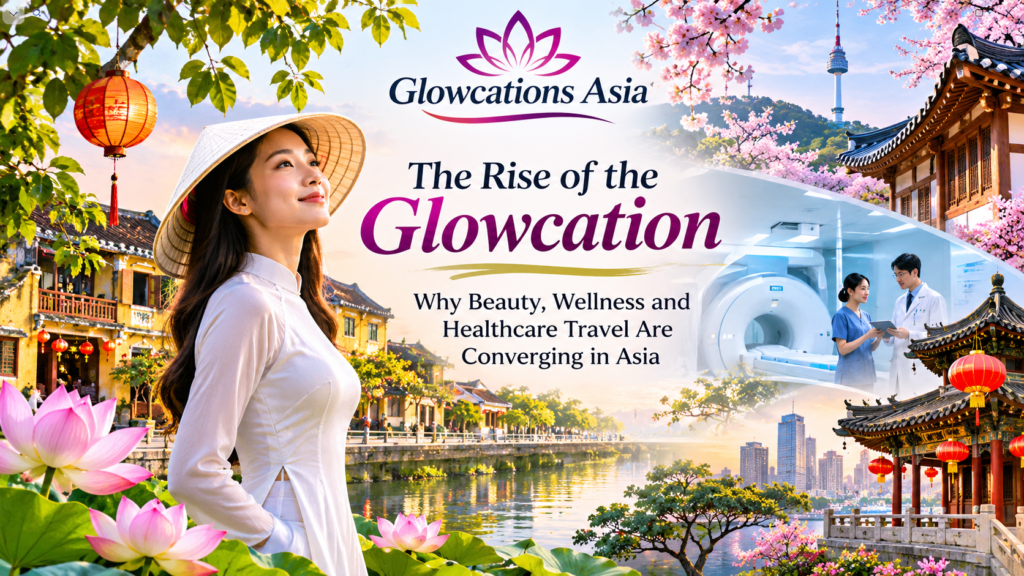
Glowcation: What Does It Mean for Beauty, Wellness and Healthcare Travel in Asia?From Seoul’s skincare clinics to Vietnam’s wellness retreats and China’s specialist hospitals, a changing approach to international travel is bringing personal wellbeing into sharper focus.
For generations, international holidays have been associated with sightseeing, relaxation and discovering unfamiliar cultures. Today, another motivation is gaining attention: travelling specifically for beauty treatments, wellness experiences or personal wellbeing.
The emerging term “glowcation” captures this changing approach to travel.
In August 2026, the South China Morning Post published “6 ‘glowcation’ destinations for your next beauty and wellness fix, from Seoul to Marrakech”. The article explored how travellers are choosing destinations for experiences ranging from Korean skincare treatments to traditional bathing rituals.
Its significance extends beyond a fashionable new expression. It reflects a broader interest in travel that serves a personal purpose.
For Glowcations Asia, this development raises an important question: Could the glowcation evolve beyond beauty and wellness to encompass responsible healthcare travel, recovery and cultural discovery?
What Exactly Is a Glowcation?
A glowcation is generally understood as a holiday in which beauty, skincare or wellness experiences are a principal reason for travelling.
Unlike a conventional holiday where a spa treatment might be an occasional indulgence, the glowcation places personal wellbeing closer to the centre of the itinerary.
Depending on the destination, travellers may seek professional skincare consultations, traditional bathing practices, spa treatments, relaxation programmes or culturally distinctive wellness experiences.
The concept is also reflected in Skyscanner’s 2026 travel trends research, which identifies beauty rituals and skincare interests as influences on travel decisions.
However, beauty services, wellness activities and medical treatments are not interchangeable. Each involves different expectations, professional responsibilities and potential risks.
Understanding these distinctions is essential as the market develops.
South Korea: Where Beauty Tourism Meets Modern Healthcare
South Korea has become internationally recognised for its beauty and skincare industries.
Seoul attracts visitors interested in dermatology, cosmetic procedures, skincare products and contemporary Korean beauty culture.
The country’s appeal extends beyond aesthetics. South Korea also has advanced hospitals, specialist medical services, diagnostic technologies and rehabilitation facilities.
For international visitors, the combination of urban convenience, cultural attractions and established healthcare infrastructure creates several different reasons to travel.
Nevertheless, a skincare consultation and a surgical procedure require very different levels of preparation.
Anyone considering invasive treatment should verify the practitioner’s qualifications, the facility’s licensing, potential complications and arrangements for follow-up care after returning home.
Explore South Korea: Healthcare, Wellness and Recovery on Glowcations Asia.
Vietnam: An Opportunity to Develop a Distinctive Glowcation Experience
Vietnam has considerable potential to participate in this evolving travel market.
Its appeal combines established tourism destinations, hospitality, traditional wellness practices and a developing range of private healthcare services.
In Ho Chi Minh City, visitors may explore professional dermatology and aesthetic consultations, subject to appropriate checks on provider qualifications and treatment safety.
In central Vietnam, destinations such as Đà Nẵng and Hội An offer coastal accommodation, wellness resorts and opportunities to experience Vietnamese culture.
Further north, Hà Nội combines historical surroundings, traditional therapeutic practices and access to healthcare facilities.
Vietnam’s opportunity is not simply to imitate South Korea’s beauty industry. It is to develop its own identity, bringing together Vietnamese hospitality, cultural heritage, responsible wellness services and appropriately coordinated healthcare.
This is particularly relevant to travellers considering extended stays.
For someone recovering from an eligible medical procedure, suitable accommodation and access to follow-up services may be important. However, recovery requirements must be determined by the treating clinician, and leisure activities should never interfere with medical advice.
The established Medical Tourism Vietnam platform provides a complementary source of information about medical services, destinations and international patient considerations.
China: Extending the Conversation into Specialist Healthcare
The glowcation trend is largely associated with beauty and wellness, but it also prompts discussion about the broader reasons people travel internationally for health-related services.
China illustrates why these distinctions matter.
Alongside traditional wellness practices, China has developed specialist healthcare capabilities in oncology, precision diagnostics, neurology and advanced medical technologies.
These services are not conventional glowcation activities.
Patients considering complex treatment abroad require specialist assessment, evidence-based information, an understanding of regulatory and clinical uncertainties, and arrangements for continuity of care.
For example, emerging cellular therapies and experimental technologies should never be presented as ordinary wellness products or guaranteed treatment options.
At Glowcations Asia, we believe specialist healthcare deserves its own prominent place within a broader platform connecting medical services, wellness and international travel.
Our approach is to distinguish clearly between established medical care, developing treatments, research participation and non-medical wellness experiences.
Traditional Wellness: Asia’s Cultural Contribution
One of Asia’s most distinctive contributions to wellness travel lies in its traditional practices.
Vietnamese herbal bathing, traditional massage and other cultural wellness experiences form part of a rich regional heritage.
Elsewhere in Asia, visitors may encounter Japanese onsen bathing, Korean spa traditions and Chinese traditional wellness practices, including those associated with Zhuang and Yao communities in Guangxi.
These experiences can offer cultural understanding, relaxation and personal enjoyment.
However, historical use or cultural significance does not automatically establish clinical effectiveness.
Visitors should distinguish between relaxation-oriented activities and treatments claiming to diagnose or manage medical conditions. Practitioner credentials, hygiene, contraindications and the quality of supporting evidence remain important considerations.
Respect for traditional practices and responsible health information can coexist.
Recovery and Extended Stays: An Important Difference
An emerging opportunity for Asian destinations is the provision of appropriate accommodation and practical support for international patients who need to remain near their treating facility.
This may include extended-stay accommodation, transport arrangements, interpretation assistance and coordination of follow-up appointments.
Such arrangements should be guided by the patient’s clinical needs rather than by tourism marketing.
Not every procedure is suitable for international travel, and some patients may need to postpone flying or avoid certain activities during recovery.
The ability to enjoy a destination is an additional consideration, never a substitute for safe medical care.
Why Trust Will Determine the Future of Healthcare and Wellness Travel
As beauty, wellness and healthcare tourism attract greater international attention, travellers face an increasingly complicated marketplace.
Online advertising, social media endorsements and attractive package prices do not always provide enough information to make an informed decision.
Before arranging medical or invasive aesthetic treatment overseas, travellers should consider:
- Whether the provider and treating practitioner are appropriately licensed and qualified.
- What evidence supports the proposed treatment.
- Whether risks, alternatives and total costs are explained transparently.
- What happens if complications occur.
- How follow-up care will be coordinated after returning home.
These questions are particularly important when medical treatment is combined with accommodation, tourism or other commercial services.
Glowcations Asia: A Broader Vision for Purposeful Travel
The growing visibility of the glowcation concept provides an opportunity to rethink how healthcare, wellness and travel information is presented.
Glowcations Asia is developing a regional platform covering Vietnam, China, Hong Kong, India, Japan, Malaysia, Singapore, South Korea and Thailand.
Our vision extends beyond beauty tourism.
We aim to bring together information about reputable healthcare providers, specialist medical services, wellness traditions, suitable accommodation, recovery considerations and the cultural experiences that make each destination distinctive.
Our longstanding associated platform, Medical Tourism Vietnam, contributes experience in international patient information and healthcare-related travel.
The objective is not to turn medical treatment into a holiday product. It is to help people understand the differences between healthcare, wellness and leisure, and make more informed choices when considering services abroad.
A Trend Worth Watching
The glowcation may have emerged from the worlds of beauty and lifestyle travel, but its wider significance is the growing desire for journeys with a personal purpose.
South Korea demonstrates the international appeal of beauty and skincare tourism. Vietnam offers opportunities to combine distinctive cultural experiences, hospitality and responsible wellness services. China illustrates the importance of treating advanced specialist healthcare as a separate, carefully evaluated field.
Across Asia, the opportunity is substantial—but so is the responsibility to provide accurate information.
The future of the glowcation should not be defined simply by how travellers look when they return home, but by the quality of the experiences, information and care they receive along the way.
Editorial note: Glowcations Asia provides travel, wellness and healthcare information. It does not diagnose medical conditions, prescribe treatment or guarantee clinical outcomes. Readers considering medical or invasive aesthetic procedures should seek independent advice from appropriately qualified healthcare professionals.
